Dreaming of an in-ground pool is exciting, but once planning begins, many homeowners hit the same roadblock: Will a pool actually fit my yard and lifestyle? Yard size, shape, slope, sun exposure, and usable space all play a critical role in determining what kind of pool will work best. That’s why choosing the right pool shape for your yard layout and space constraints is one of the most important decisions you’ll make during the design phase.
In this guide, you’ll learn how different yard layouts influence pool design, which pool shapes work best in specific spaces, and how practical factors like budget, zoning rules, and long-term maintenance should shape your final choice.
Why the Right Pool Shape for Your Yard Layout Matters?
Pool shape isn’t just an aesthetic decision; it directly impacts:
- How efficiently your yard space is used
- What activities does the pool support (laps, lounging, entertaining)
- Construction complexity and cost
- Landscaping flow and outdoor living areas
A professionally designed pool should feel intentional, not forced. The right pool shape for your yard complements your yard’s dimensions, works with natural features like slopes or trees, and preserves space for patios, play areas, or gardens.
Common Yard Layout Types and Ideal Pool Shapes
Small or Narrow Yards
Limited space requires smart, efficient design.
Best pool shapes:
- Rectangular pools
- Slim geometric pools
- Spool-style (small pool + spa combination)
Why they work:
Straight lines maximize swim area while minimizing wasted space. These shapes are easier to position within setback requirements and often allow room for decking or seating along one edge.
Pro insight: In narrow yards, access for construction equipment is critical. Designers often choose shapes that reduce excavation complexity and avoid costly hand-digging.
Large Open Backyards
Open layouts allow for creativity and scale.
Best pool shapes:
- Freeform pools
- L-shaped pools
- Custom geometric designs
Why they work:
Larger yards can support pools that anchor the landscape design, integrate spas or tanning ledges, and create distinct zones for swimming and entertaining.
Pro insight: Sun exposure matters more in big yards. Pool orientation should maximize sunlight while avoiding excessive wind exposure.
Sloped or Uneven Lots
Slopes introduce engineering challenges, but also design opportunities.
Best pool shapes:
- Rectangular or geometric pools
- Infinity-edge or terrace-style pools
Why they work:
Clean lines are easier to engineer on uneven terrain and pair well with retaining walls or elevated decks.
Pro insight: Proper drainage and soil stabilization are essential. A professional builder will assess grading, runoff paths, and long-term structural integrity.
Irregular or Angled Yard Shapes
Unique lots benefit from flexible design.
Best pool shapes:
- Freeform pools
- Custom organic designs
- Modified geometric pools
Why they work:
These shapes are designed to adapt to property lines, existing landscaping, and architectural features.
Pro insight: Custom shapes may increase design and construction costs, but they often preserve more usable yard space overall.
Popular Pool Shapes Explained
Rectangular Pools
- Ideal for lap swimming
- Efficient use of space
- Easier and often more affordable to build
Best suited for modern homes, narrow yards, and homeowners prioritizing functionality.
Freeform Pools
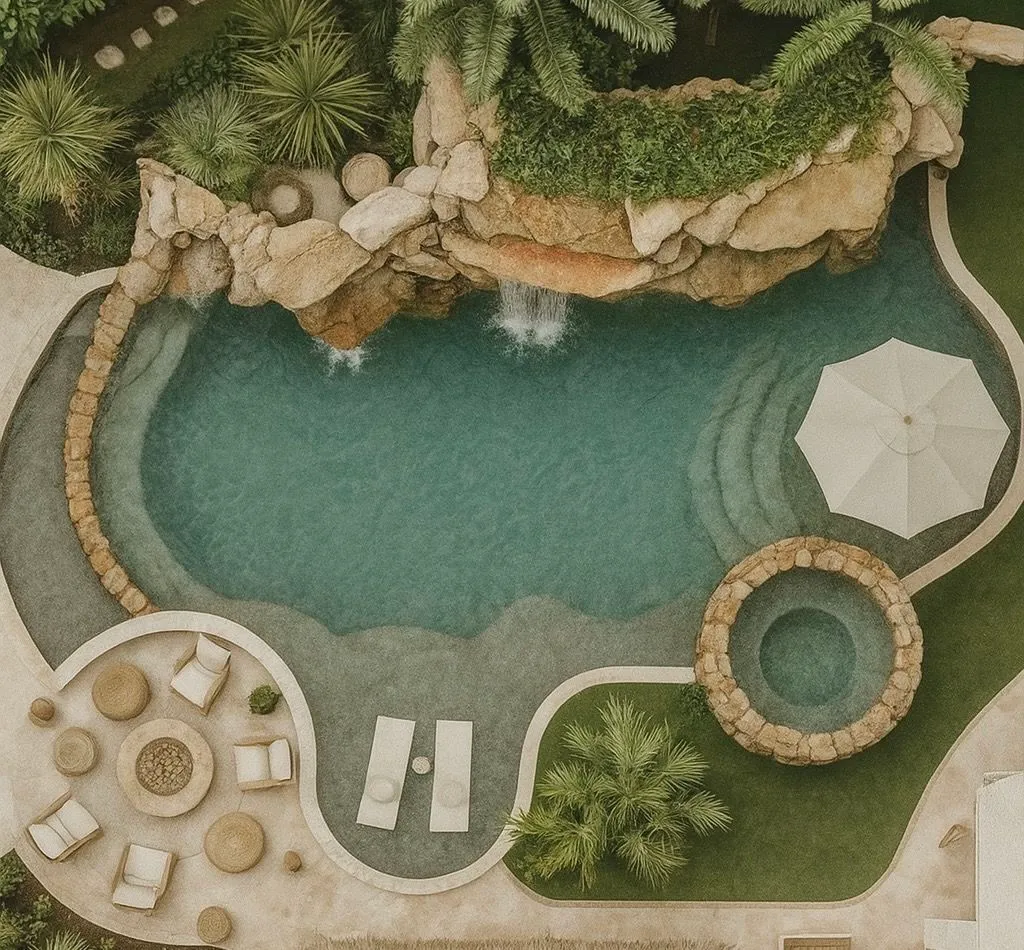
- Natural, flowing curves
- Great for relaxed, resort-style backyards
- Blend seamlessly with landscaping
Best for large or irregular yards and entertainment-focused designs.
L-Shaped Pools
- Separate zones for swimming and lounging
- Excellent for families
- Visually interesting without being overly complex
Best for medium-to-large yards with multiple outdoor activity areas.
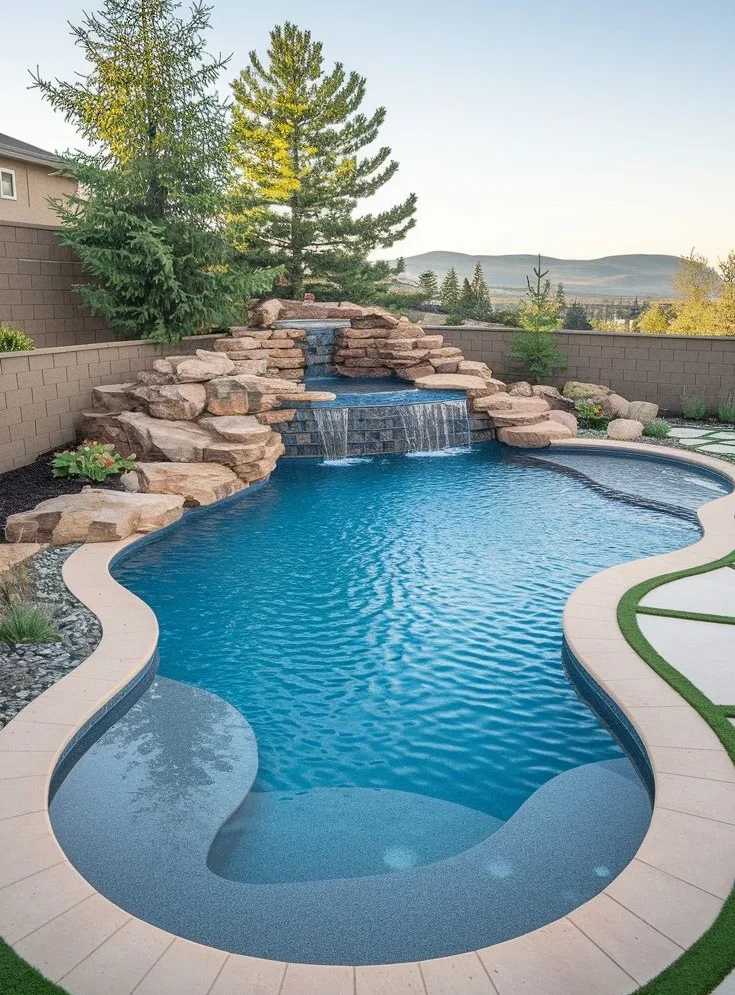
Kidney-Shaped Pools
- Classic, organic design
- Softer look than rectangles
- Fits well into curved or landscaped yards
Best for homeowners seeking a timeless, less formal appearance.
Geometric vs Organic Designs
- Geometric: Clean lines, modern aesthetics, efficient construction
- Organic: Natural appearance, custom fit, enhanced visual flow
Your home’s architecture should guide this choice just as much as yard layout.
How Pool Shape Affects Key Design Factors
Usable Yard Space
A well-chosen pool shape leaves room for:
- Patios and outdoor kitchens
- Walkways and seating areas
- Lawn or play space
Poor shape selection can make even a large yard feel cramped.
Pool Function
Different shapes support different uses:
- Rectangular: lap swimming, fitness
- Freeform: socializing, relaxation
- L-shaped: multi-purpose households
Clarify how you’ll use the pool before finalizing the design.
Landscaping and Hardscaping
Pool shape determines:
- Deck layout and flow
- Plant placement
- Shade structures and fencing
Straight edges simplify hardscaping, while curves integrate better with natural landscapes.
Budget and Construction Complexity
- Rectangular pools are typically the most cost-effective
- Custom and freeform designs may increase labor, materials, and engineering costs
- Sloped lots often require additional structural work
A pool designer can help balance visual goals with financial realities.
Zoning, Setbacks, and Local Regulations to Consider
Before finalizing any pool shape, homeowners must account for:
- Property line setbacks
- Easements and utility locations
- Pool fencing and safety requirements
- Drainage and runoff regulations
Ignoring these constraints early can force costly redesigns later.
Conclusion
Choosing the Right Pool Shape for Your Yard is essential for making the most of your available space, enhancing visual appeal, and ensuring the pool fits your lifestyle. By considering your yard’s layout, size, and how you plan to use the pool, you can select a design that balances functionality, comfort, and long-term value.
Selecting the Right Pool Shape for Your Yard starts with understanding how the pool will interact with your outdoor space. Factors like lot dimensions, existing landscaping, and desired traffic flow all influence which shape will feel natural and efficient rather than forced or restrictive.
A professional pool designer can evaluate your yard, lifestyle goals, and local regulations to recommend a shape that maximizes enjoyment while avoiding unnecessary costs or complications. Thoughtful planning now leads to a pool you’ll enjoy for decades.