
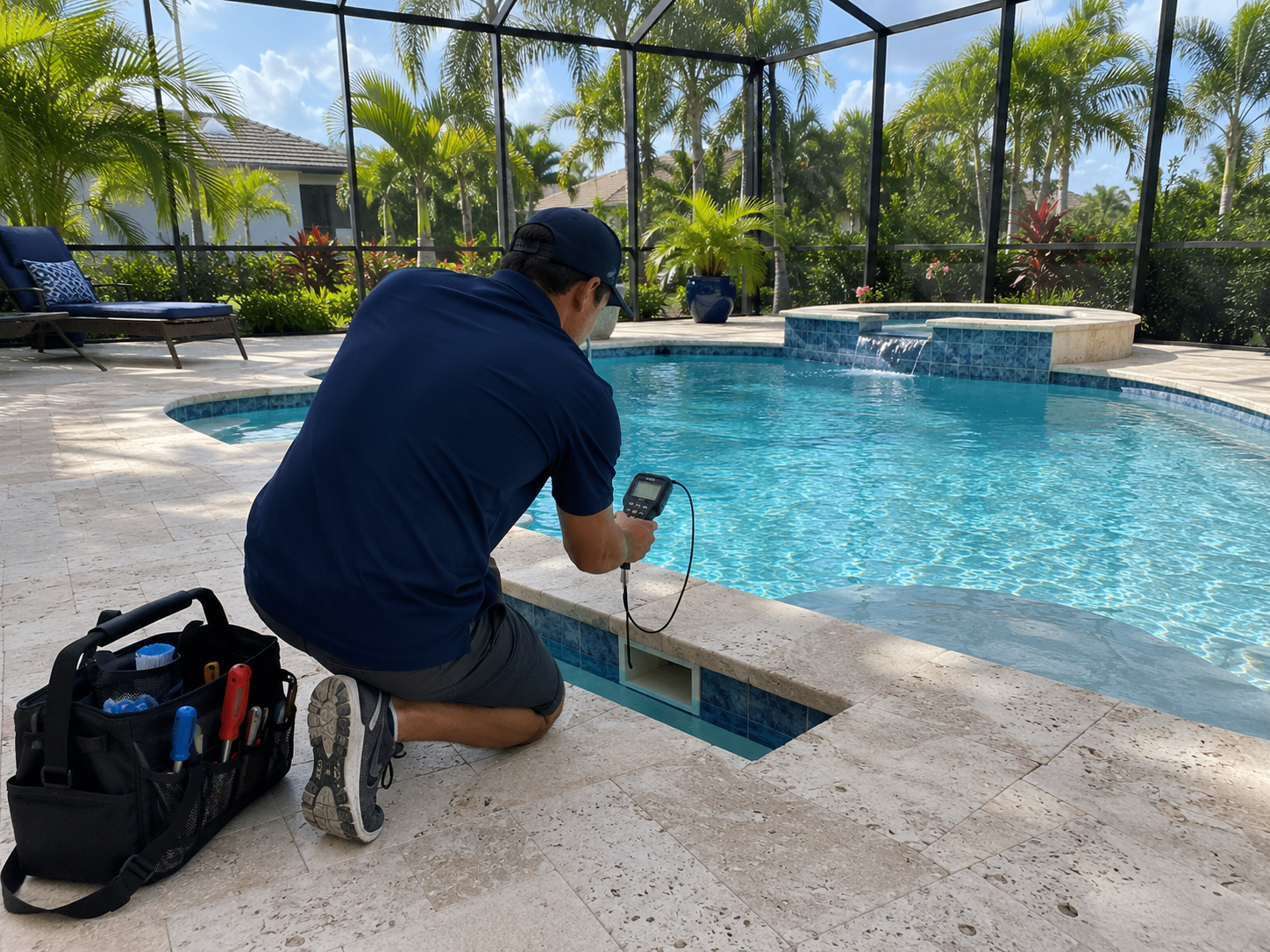
Your water bill just jumped, and your pool seems to be losing more water than usual. Pool leak detection is one of the most overlooked services homeowners need. That changes fast, right up until the moment they actually need it. At Sunseeker Pool and Spa, we build and renovate pools across Venice, Sarasota, and the surrounding Gulf Coast. Leak detection is just as much a part of what we do. Here is what you should know before calling anyone.
Why Leaks Are Easy to Miss in Southwest Florida
Florida heat makes evaporation a normal, everyday part of pool ownership. That normal water loss can easily hide a real leak underneath it.
A pool can lose a quarter inch of water a day from evaporation alone during our hottest months. Anything beyond that consistently points toward something else going on, not just the sun doing its job.
Common Signs You May Have a Leak
A few signs together are far more reliable than any single one on its own. Watch for these patterns rather than jumping to conclusions from one symptom.
* Water loss of more than a quarter inch per day beyond normal evaporation
* Wet or unusually soft spots in the yard near underground plumbing lines
* Cracks around the skimmer, light fixture, or steps
* A water bill that keeps climbing with no real change in pool usage
* Air bubbling from return jets during normal filtration
If you notice two or more of these at once, that combination is worth taking seriously.
The Bucket Test: A Simple First Step
Before calling a professional, most homeowners can run a basic test themselves. Place a bucket on the pool's second step, filled to match the pool's current water level.
Mark both water lines with tape. Check again after 24 hours. If the pool has dropped more than the bucket, you likely have a real leak, not just normal evaporation. A gap of an inch or more over a full day is a strong signal either way.
What Happens During a Professional Inspection
Once you call Sunseeker Pool and Spa, our process starts simple. We do a visual walkthrough of the pool, equipment pad, and surrounding yard. Sometimes the source is easier to spot than homeowners expect, especially with an experienced eye.
If nothing is immediately visible, we move to pressure testing the plumbing lines. This isolates whether water loss is coming from underground pipes or from the pool shell itself. That distinction changes the entire repair approach.
Electronic Detection Equipment
For leaks that are not visible, we use electronic listening equipment. It can pick up the sound of water escaping through even a small crack or fitting. This technology lets us pinpoint a leak's location without guessing or tearing up your entire yard first.
Dye testing is another tool in the process. When a crack is visible, but we need to confirm it is actively leaking, dye testing helps. Dye pulled toward the crack confirms active leaking in a way visual inspection alone cannot.
The Most Common Leak Sources We Find
Contrary to what most homeowners assume, the pool shell itself is rarely the actual source of a leak. Skimmers, light fixtures, and equipment pad connections cause the majority of leaks we encounter.
A skimmer leak often shows up as settling or cracking around the skimmer throat itself. Skimmers sit at a fixed water level. Because of that, this type of leak causes water loss that stops once the level drops below the skimmer opening. That pattern is a useful diagnostic clue.
Pool Lights: An Overlooked Leak Source
Pool light fixtures have a gasket seal that degrades over time, especially with age or improper reinstallation after maintenance. A failing light seal can leak steadily without any obvious visual sign until water loss becomes noticeable.
This is one of the more overlooked leak sources we run into. Homeowners rarely think to check a light fixture unless someone points it out specifically.
Renovation Projects and Hidden Leaks
We handle both leak detection and pool renovation. Because of that overlap, we often catch leaks homeowners did not even know they had while assessing a pool for resurfacing or remodeling work.
Finding a leak before renovation begins saves real money down the line. Resurfacing over an undiagnosed leak just hides the problem. It stays buried under fresh plaster or pebble finish, only to resurface later as a bigger, more expensive repair.
Why Timing Matters More Than People Realize
A leak that goes unaddressed does not stay the same size. Water finding its way through a crack or fitting erodes the soil underneath over time. That erosion can lead to further settling and a bigger problem down the road.
This creates a cycle that gets more expensive the longer it runs. Catching a leak early, while it is still a simple repair, saves money. Waiting until secondary damage has started always costs more.
What Repair Costs Typically Look Like
Costs vary significantly based on what is actually causing the leak. A simple skimmer or light fixture repair often runs a few hundred dollars. Structural shell repairs or extensive plumbing work can run into several thousand instead.
That range is exactly why proper diagnosis matters before committing to any repair. Guessing at the source and paying for the wrong fix twice costs more than paying for accurate testing once.
Common Misconceptions About Pool Leaks
Many homeowners assume any water loss automatically means a major structural repair is coming. That is usually not the case. Most leaks we find trace back to small components like skimmers, lights, or fittings, not the pool shell itself.
Another misconception involves DIY leak sealant products sold at pool supply stores. These products can sometimes mask a leak temporarily. However, they often make it harder for a technician to accurately locate the true source, once you do call for professional help.
Seasonal Timing for Leak Detection in Southwest Florida
Summer heat makes leak detection trickier. Evaporation rates climb and can mask a smaller leak hiding underneath normal seasonal water loss. A pool losing water in July might have a real leak hidden beneath what looks like just heat and sun.
Fall and winter tend to be the easiest times to get an accurate read. Evaporation slows down, which makes any abnormal water loss stand out more clearly during testing. That said, do not wait for a convenient season if you are already seeing multiple warning signs today.
Why Local Experience Matters for Leak Detection
Working with a company that knows the Venice, Sarasota, and Charlotte County area matters more than most homeowners realize. Our team understands common builder practices, soil conditions, and the typical equipment installed across different construction eras in this region.
That local knowledge often speeds up diagnosis. We already have a sense of what is likely versus unlikely, based on a home's age and neighborhood, before we even arrive on site.
Frequently Asked Questions
How do I know if my pool has a leak or if it is just evaporation?
Run a bucket test by placing a marked bucket on your pool step and comparing water loss after 24 hours. If your pool drops more than the bucket, that points to a leak. A drop of a quarter inch per day or less is usually within normal evaporation range for our climate.
How much does pool leak detection cost in the Sarasota area?
Costs vary based on the complexity of testing required. Even so, most standard inspections cost less than guessing wrong and paying for an unnecessary repair. We provide a clear estimate before any testing begins.
Can a leak be fixed without draining my whole pool?
In many cases, yes. Skimmer repairs, light fixture repairs, and many plumbing leaks typically do not require a full drain. Structural shell repairs sometimes need a partial or full drain, depending on the location and severity of the damage.
What is the most common cause of pool leaks in this area?
Skimmers, light fixtures, and equipment pad connections cause the majority of leaks we find. The pool shell itself is rarely the real culprit. This is why a proper inspection starts with these components before assuming a bigger structural issue.
Should I get a leak inspection before renovating my pool?
Yes, this is one of the smartest steps you can take. Finding and fixing a leak before resurfacing or remodeling prevents a real problem. It stops the leak from getting sealed under new finish, where it would only resurface later as a more expensive repair.
How long does a typical leak detection appointment take?
Most inspections take one to two hours, depending on pool size and how many potential leak points need testing. We walk homeowners through each step as we go, so you understand exactly what we find and why.
If your water bill keeps climbing and you cannot explain why, do not wait for the problem to get worse. Schedule a free leak inspection with Sunseeker Pool and Spa. We will find out exactly what is happening before you spend a dollar on repairs.